Navigating 2026 Federal Arts Grants: Steps for Visual Artists
Advertisements
Ready to fund your next major exhibition or public installation without draining your studio savings? Navigating Federal Arts Grants in 2026 gives visual artists a proven pathway to unlock $10,000 in project backing—provided you know how National Endowment for the Arts (NEA) and partner funding channels actually work.
Because direct federal project awards like NEA Grants for Arts Projects require applying through an eligible 501(c)(3) nonprofit partner, local arts agency, or state subgranting program rather than as a solo individual, structuring your proposal correctly is critical. Strong work samples, a matching budget plan, and early SAM.gov or fiscal registrations separate funded portfolios from rejected submissions.
Whether you are submitting your first public-art proposal or teaming up with a community gallery for the upcoming guidelines cycle, following a clear roadmap takes the guesswork out of government paperwork. Here are four essential steps to position your visual art project for federal support.
Understanding the 2026 Federal Arts Grants Landscape
The federal arts grants landscape for 2026 is expected to continue its commitment to supporting diverse artistic expressions and emerging talent. Agencies like the National Endowment for the Arts (NEA) are primary sources of funding, offering various programs tailored to different artistic disciplines.
These grants are crucial for fostering innovation, cultural enrichment, and economic development within the arts sector. First-time visual artists must familiarize themselves with the specific objectives and priorities of these federal programs to align their projects effectively.
Successful navigating 2026 Federal Arts Grants begins with a thorough understanding of the funding environment. This foundational knowledge allows artists to identify the most suitable grant opportunities for their work.
Key Federal Agencies and Programs
The National Endowment for the Arts (NEA) stands as a cornerstone for federal arts funding, offering grants through programs such as "Grants for Arts Projects" and "Challenge America." These programs often have specific categories for visual arts, supporting creation, presentation, and public engagement.
Beyond the NEA, other federal entities may offer tangential funding opportunities that can benefit visual artists, such as those focused on cultural heritage or community development through art. Researching these broader avenues can uncover additional resources.
National Endowment for the Arts (NEA): Primary source for direct arts funding.
Institute of Museum and Library Services (IMLS): Supports projects with public engagement components.
National Endowment for the Humanities (NEH): Sometimes funds projects with a strong humanities connection.
State Arts Agencies: Often receive federal pass-through funds, offering localized grants.
Artists should meticulously review the guidelines for each program, paying close attention to eligibility criteria, funding priorities, and application deadlines. This due diligence is a critical component of navigating 2026 Federal Arts Grants.
Step 1: Thorough Research and Eligibility Assessment
The initial phase of securing federal arts grants involves comprehensive research into available opportunities and a rigorous self-assessment of eligibility. Many first-time applicants overlook the importance of matching their project to the grant's specific mission, leading to wasted effort.
It is imperative to identify grants that not only align with your artistic discipline but also resonate with the funding agency's stated goals. Federal agencies often publish their strategic plans and funding priorities years in advance, providing a roadmap for potential applicants.
This early research helps artists avoid applying for grants for which they are not genuinely competitive. A clear understanding of eligibility requirements is foundational for navigating 2026 Federal Arts Grants.
Identifying Suitable Grant Opportunities
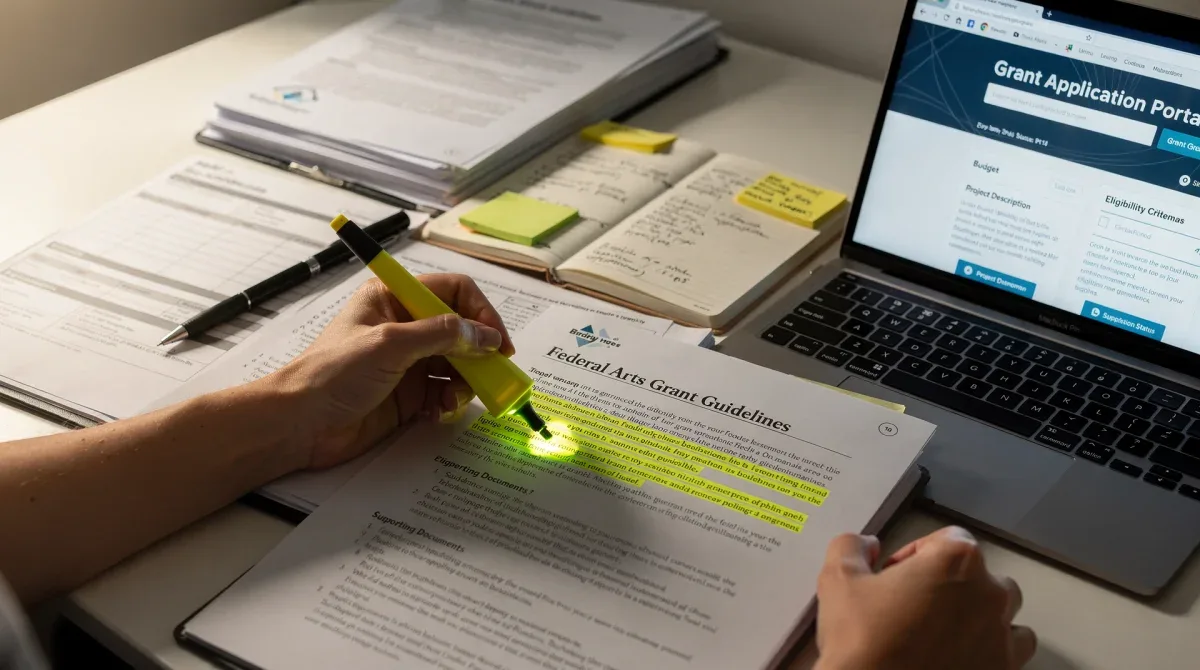
Begin by exploring the official websites of federal arts agencies, particularly the NEA. Look for programs specifically designated for individual artists, emerging artists, or project-based funding in the visual arts category.
Pay close attention to the grant's stated objectives, types of projects funded, and any thematic priorities for the 2026 cycle. Some grants may prioritize projects addressing specific social issues, engaging underserved communities, or utilizing innovative artistic approaches.
Cross-referencing your artistic vision and project goals with these priorities is crucial. A strong thematic fit significantly increases the likelihood of your application being favorably reviewed, making this step vital for navigating 2026 Federal Arts Grants.
Verifying Applicant and Project Eligibility
Once potential grants are identified, meticulously review the eligibility criteria for both the applicant and the proposed project. Federal grants often have strict requirements regarding citizenship, residency, professional experience, and organizational status (if applicable).
For first-time visual artists, understanding what constitutes "emerging artist" status within grant guidelines is critical. Some grants define it by years of professional practice, exhibition history, or lack of significant prior funding.
Confirm U.S. citizenship or permanent residency status.
Check any requirements for age or educational background.
Verify if your project type (e.g., painting, sculpture, digital art) is explicitly supported.
Ensure your project timeline and budget fall within the grant's parameters.
Any discrepancy in eligibility can lead to immediate disqualification, regardless of the project's artistic merit. This rigorous verification process is a non-negotiable part of navigating 2026 Federal Arts Grants.
Step 2: Crafting a Compelling Project Proposal
A well-written and compelling project proposal is the cornerstone of a successful grant application. This document must clearly articulate your artistic vision, project objectives, methodology, and anticipated impact in a way that resonates with grant reviewers.
For first-time applicants, it's essential to present a project that is both ambitious and achievable, demonstrating a clear understanding of its scope and feasibility. The proposal should be concise, persuasive, and free of jargon, allowing reviewers to easily grasp your intentions.
Developing a strong narrative that connects your artistic practice to the grant's mission is key. This step is where artists transform their creative ideas into a fundable plan, crucial for navigating 2026 Federal Arts Grants.
Articulating Your Artistic Vision and Project Objectives
Begin by clearly stating your artistic vision and how the proposed project contributes to it. What unique perspective or contribution does your work offer to the visual arts field? This section should capture the essence of your creative drive.
Next, define specific, measurable, achievable, relevant, and time-bound (SMART) objectives for your project. Instead of vague statements, quantify what you aim to achieve, for example, "create 10 new sculptures" or "exhibit work in 3 public spaces."
Clearly outlining your objectives provides a roadmap for reviewers and demonstrates your project's intentionality. This precision is vital for effective navigating 2026 Federal Arts Grants.
Developing a Detailed Methodology and Budget
The methodology section should describe exactly how you plan to execute your project, step by step. This includes materials, techniques, timelines, and any collaborators involved. Be realistic about what can be achieved within the proposed timeframe and budget.
Your budget must be detailed, justified, and align with the project activities. Itemize all anticipated expenses, such as materials, studio rental, equipment, exhibition costs, and artist fees. Ensure that the requested $10,000 aligns with the project's actual needs.
Break down project phases with estimated timelines.
List all necessary materials and their estimated costs.
Include any travel, research, or documentation expenses.
Justify each budget line item in relation to project activities.
A transparent and well-justified budget demonstrates financial responsibility and strengthens your proposal. This meticulous planning is critical when navigating 2026 Federal Arts Grants.
Step 3: Assembling a Strong Portfolio and Support Materials
For visual artists, the portfolio is often the most critical component of a grant application, offering tangible evidence of artistic skill and vision. A strong portfolio can speak volumes where words alone cannot, showcasing the quality and consistency of your work.
Beyond the portfolio, various support materials, such as artist statements, résumés, and letters of recommendation, provide crucial context and reinforce your professional standing. These elements collectively build a comprehensive picture of you as an artist.
Ensuring all materials are professionally presented and adhere to submission guidelines is non-negotiable. This holistic approach to presenting your work is essential for navigating 2026 Federal Arts Grants.
Curating an Impactful Artistic Portfolio
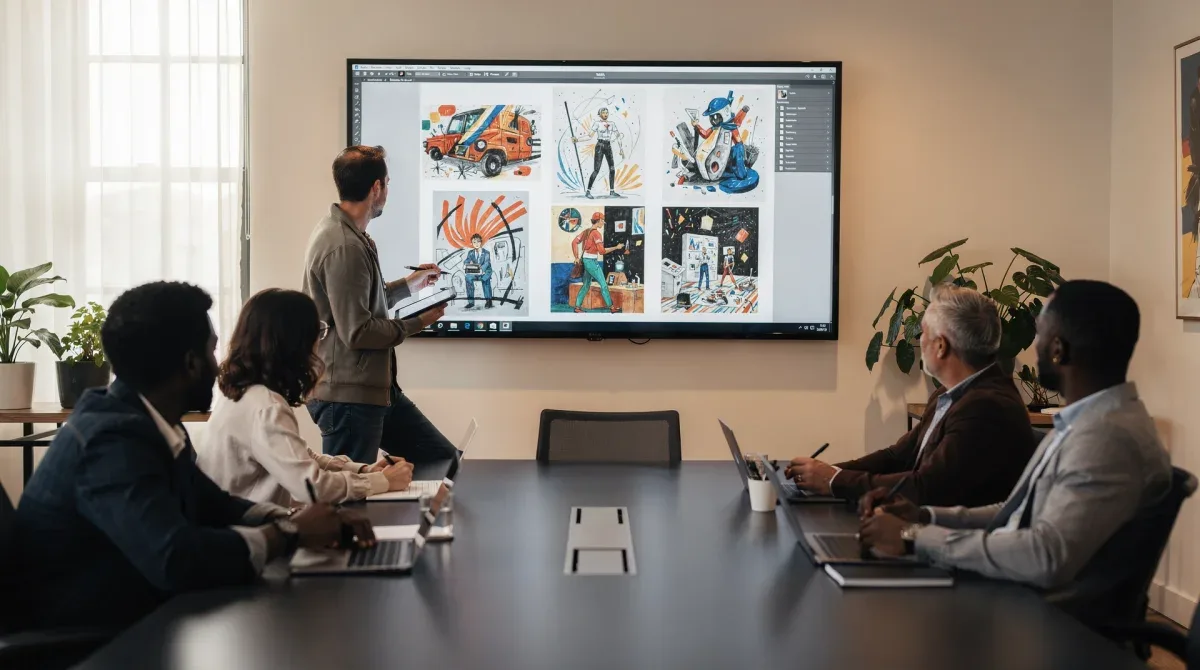
Select your strongest, most relevant pieces that best represent your current artistic practice and align with the proposed project. Quality over quantity is paramount; a cohesive portfolio of 5-10 exceptional works is often more effective than a larger collection of inconsistent pieces.
Ensure high-resolution images or videos that accurately capture your artwork. Provide clear titles, dates, dimensions, and medium for each piece. If applicable, include installation shots or process documentation to provide context.
A well-curated portfolio demonstrates professionalism and artistic maturity. This visual evidence is a powerful tool in navigating 2026 Federal Arts Grants.
Preparing Essential Support Documents
Your artist statement should articulate your artistic philosophy, influences, and the themes explored in your work. Keep it concise (150-250 words) and compelling, connecting your practice to the broader art world.
A professional résumé or CV should detail your exhibition history, education, awards, and any relevant professional experience. For first-time applicants, highlight workshops, residencies, or community projects that demonstrate commitment.
Artist Statement: A concise explanation of your work and philosophy.
Artist Résumé/CV: A professional summary of your artistic career.
Letters of Recommendation: From mentors, professors, or curators who know your work.
Work Samples: High-quality images or videos of your artwork.
Solicit strong letters of recommendation from individuals who can genuinely speak to your artistic talent and potential. These testimonials add significant weight to your application when navigating 2026 Federal Arts Grants.
Step 4: Meticulous Review and Timely Submission
The final step, and arguably one of the most critical, is a thorough review of your entire application package and its timely submission. Even the most brilliant project proposal can be undermined by simple errors or missed deadlines.
Federal grant applications often involve complex online portals and specific formatting requirements. Adhering to every instruction, no matter how minor it seems, is crucial for your application to even be considered for review.
Allow ample time for this final review process, ideally having multiple sets of eyes examine your materials. This attention to detail is the last hurdle in successfully navigating 2026 Federal Arts Grants.
Proofreading and Adhering to Submission Guidelines
Proofread every single document for grammatical errors, typos, and inconsistencies. A polished application reflects professionalism and attention to detail, which reviewers appreciate.
Double-check all formatting requirements, including font sizes, file types, document lengths, and image resolutions. Many online portals have automated checks that will reject applications that do not meet these specifications.
Ensure that all required fields in the online application portal are completed accurately. Incomplete applications are automatically disqualified, making this step paramount for navigating 2026 Federal Arts Grants.
Submitting Your Application Before the Deadline
Grant deadlines are absolute and strictly enforced. Do not wait until the last minute to submit your application, as technical issues with online portals can arise.
Aim to submit your application at least 24-48 hours before the official deadline. This buffer allows for any unexpected technical difficulties or last-minute adjustments.
Verify the exact submission date and time zone.
Confirm successful upload of all documents.
Save confirmation emails or screenshots of successful submission.
Be aware of potential server load issues close to deadlines.
A timely and complete submission demonstrates your organizational skills and commitment. Successfully navigating 2026 Federal Arts Grants hinges on this final, critical action.
Post-Submission: What Happens Next?
After submitting your application for 2026 Federal Arts Grants, a period of waiting begins. Federal agencies typically have a multi-stage review process involving panels of experts, peer reviewers, and internal staff. This process can take several months.
During this time, it is important to remain patient and avoid contacting the grant office unless specifically instructed or if there is a critical update to your contact information. Most agencies will communicate decisions via email or their online portal.
Even if your application is not successful, the experience of preparing and submitting it is invaluable. Many agencies offer feedback or debriefing opportunities that can inform future applications, aiding in your ongoing efforts for navigating 2026 Federal Arts Grants.
Understanding the Review Process
Grant applications are usually reviewed by panels of independent experts in the visual arts field. These panelists evaluate applications based on artistic merit, project significance, feasibility, and alignment with the grant's criteria.
Scores and comments from these panels are then considered by agency staff, who make final recommendations for funding. The process is designed to be objective and competitive, ensuring that funds are allocated to the most deserving projects.
Familiarizing yourself with the general review process helps manage expectations and provides insight into the criteria used for evaluation. This transparency is part of the broader framework for navigating 2026 Federal Arts Grants.
Leveraging Feedback for Future Applications
If your application is declined, seek feedback from the granting agency if it is offered. Constructive criticism can highlight areas for improvement in your proposal, portfolio, or overall approach.
Use this feedback to refine your project idea, strengthen your application materials, and better understand the expectations of federal funders. Grant seeking is often an iterative process, and initial rejections are common.
Continuously improving your grant writing and project development skills is key to long-term success. Each application, successful or not, contributes to your expertise in navigating 2026 Federal Arts Grants.
Key Step | Brief Description |
|---|---|
Research Grants | Identify suitable federal arts grants and confirm eligibility. |
Craft Proposal | Develop a clear, compelling project proposal and budget. |
Prepare Portfolio | Curate a strong artistic portfolio and gather support materials. |
Submit Timely | Review thoroughly and submit the application well before the deadline. |
Frequently Asked Questions About Federal Arts Grants
What is the typical funding amount for first-time visual artists?▼
For first-time visual artists, federal arts grants often range from $5,000 to $15,000, with $10,000 being a common target for project funding. Specific amounts depend on the grant program, project scope, and overall funding availability. It is crucial to align your budget request with the realistic needs of your project and the grant's typical award range.
Are there specific federal grants for emerging artists?▼
Yes, some federal agencies, particularly the NEA, offer programs or categories specifically designed to support emerging artists. These grants aim to foster new talent and provide early career funding. Artists should carefully review grant guidelines for definitions of 'emerging artist' status and targeted opportunities to maximize their chances of success.
How important is an artist's prior experience for federal grants?▼
While extensive prior experience is beneficial, it's not always a strict prerequisite for emerging artist grants. Reviewers prioritize artistic quality, project feasibility, and potential impact. A strong portfolio, clear artistic vision, and well-structured proposal can often outweigh a limited professional exhibition history. Focus on demonstrating potential and commitment.
Can I apply for multiple federal arts grants simultaneously?▼
Generally, yes, you can apply for multiple federal arts grants. However, you must ensure that your proposed projects are distinct or clearly differentiate how each grant would fund a specific, separate component. Double-funding the exact same project with federal money is usually prohibited. Always check each grant's specific rules regarding concurrent applications.
What if my project changes after receiving a grant?▼
If your project needs to change significantly after receiving a federal grant, you must communicate immediately with the granting agency. Most agencies have procedures for requesting project modifications or budget reallocations. Unauthorized changes can lead to grant revocation or repayment requirements. Transparency and prompt communication are essential for compliance.
Looking Ahead
The landscape for navigating 2026 Federal Arts Grants continues to evolve, with ongoing discussions about increasing support for individual artists. As the 2026 cycle approaches, artists are encouraged to stay informed on policy changes and funding announcements from federal agencies.
The commitment to fostering emerging talent remains strong, offering a promising outlook for those prepared to engage with the grant application process. Proactive engagement and strategic planning will be key to unlocking these vital resources for the visual arts community.